Reading: 2 Chronicles 35–36; Ezra 1–3
Big Picture
2 Chronicles 35–36 closes the story of Judah’s kings and records the final collapse of the kingdom. Josiah leads one final season of renewal and worship, celebrating Passover in a way that had not been seen for generations. Yet after his death, the nation quickly returns to instability. One king after another drifts further from God, ignoring warnings and rejecting correction.
Eventually, Babylon conquers Jerusalem. The temple is destroyed, the walls are broken down, and the people are carried into exile. The story ends in devastation. What had once been strong now lies in ruins.
But the story does not actually end there.
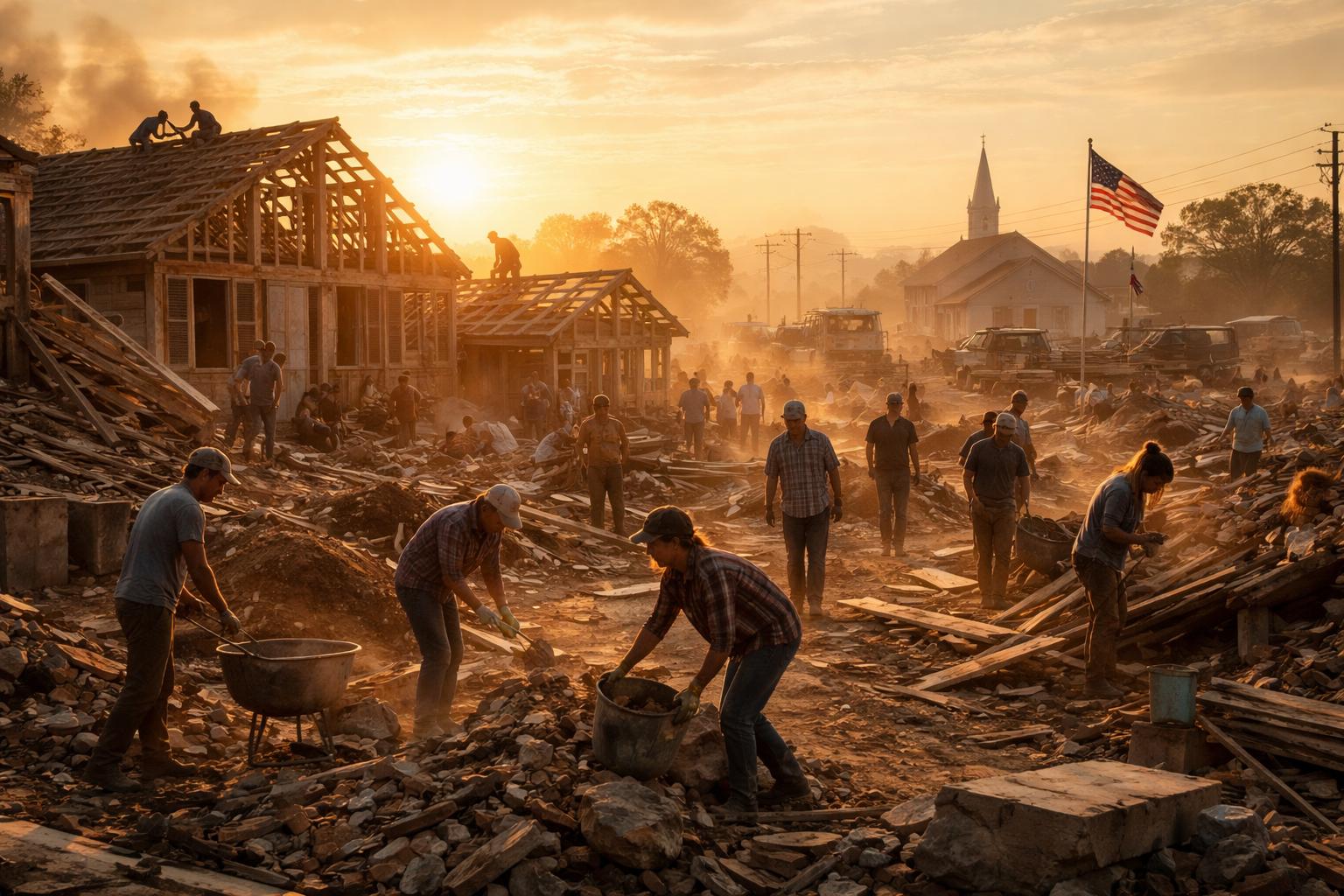
Ezra 1 begins with an unexpected shift. God moves the heart of Cyrus, king of Persia, to allow the people to return and rebuild the temple. What seemed permanently destroyed becomes the starting point for restoration.
In chapters 2 and 3, the people return, lay the foundation, and begin worship again. The rebuilding is incomplete and fragile, but it has begun. Some celebrate with joy while others weep, remembering what had been lost. The emotions are mixed because restoration often carries both gratitude and grief at the same time.
The Manly Training Lens
Grace reminds us that failure and ruin do not have to be the end of the story. Judah’s collapse was real. The consequences of generations of drift could not be avoided forever. Yet even after judgment, God was still working toward restoration.
This is a critical point of formation. Many people assume that once something has been broken long enough, it cannot be rebuilt. But Ezra shows that God specializes in restoration, even when the damage is deep.
The rebuilding begins with something simple—a foundation. Not the completed temple. Not immediate success. Just the beginning. This matters because restoration is usually slower and more humble than people expect. It often starts with laying one stone at a time.
The people’s mixed reaction also reveals something important. Some rejoiced because they saw hope. Others wept because they remembered what once existed. Both responses were understandable. Restoration does not erase the pain of what was lost, but it does prove that loss is not final.
Here Christ is revealed as the ultimate restorer. Jesus does not simply repair external structures—He rebuilds lives, restores identity, and creates new beginnings where people believed only ruin remained.
Leadership application becomes clear: rebuilding begins when someone believes restoration is still possible.
Reflection Question
What area of your life have you quietly assumed could never be rebuilt?
Final Thought
Jerusalem fell. The temple was destroyed. The people were carried away. Yet God was not finished.
The foundation laid in Ezra was more than construction—it was proof that restoration had begun.
Christ stands as the One who rebuilds what sin, failure, and time have broken. Knowing Him gives us hope that no ruin is beyond redemption.
Sometimes the greatest sign of faith is simply starting to rebuild.
Stay Connected with Manly Training
Manly Training exists to form men, strengthen families, and shape the next generation through grace, truth, and disciplined faith. If this teaching served you, the best next step is to stay connected and walk the rhythm with us.
The Manly Training Rhythm
Daily — 6:00 AM | Year of the Bible
Scripture-centered formation to begin each day grounded in God’s Word.
Mondays — 12:00 PM | Small Group Discipleship
Teaching and guidance for men, families, and leaders.
Wednesdays — 6:00 PM | Foundations & Formations
Deeper teaching shaped by experience, Scripture, and lessons refined over time.
Fridays — 6:00 PM | Teen Discipleship Series
Intentional formation for the next generation.
Same mission. Clear rhythm. Sustainable growth.
About the Author
Eduardo Quintana is the founder of Manly Training, a Christ-centered movement devoted to forming men, strengthening families, and guiding the next generation through the transforming power of God’s grace. He teaches from the conviction that true strength flows from identity in Christ, not pressure or performance.
Copyright Notice
© 2015–2026 Manly Training. All Rights Reserved.




Leave a Reply